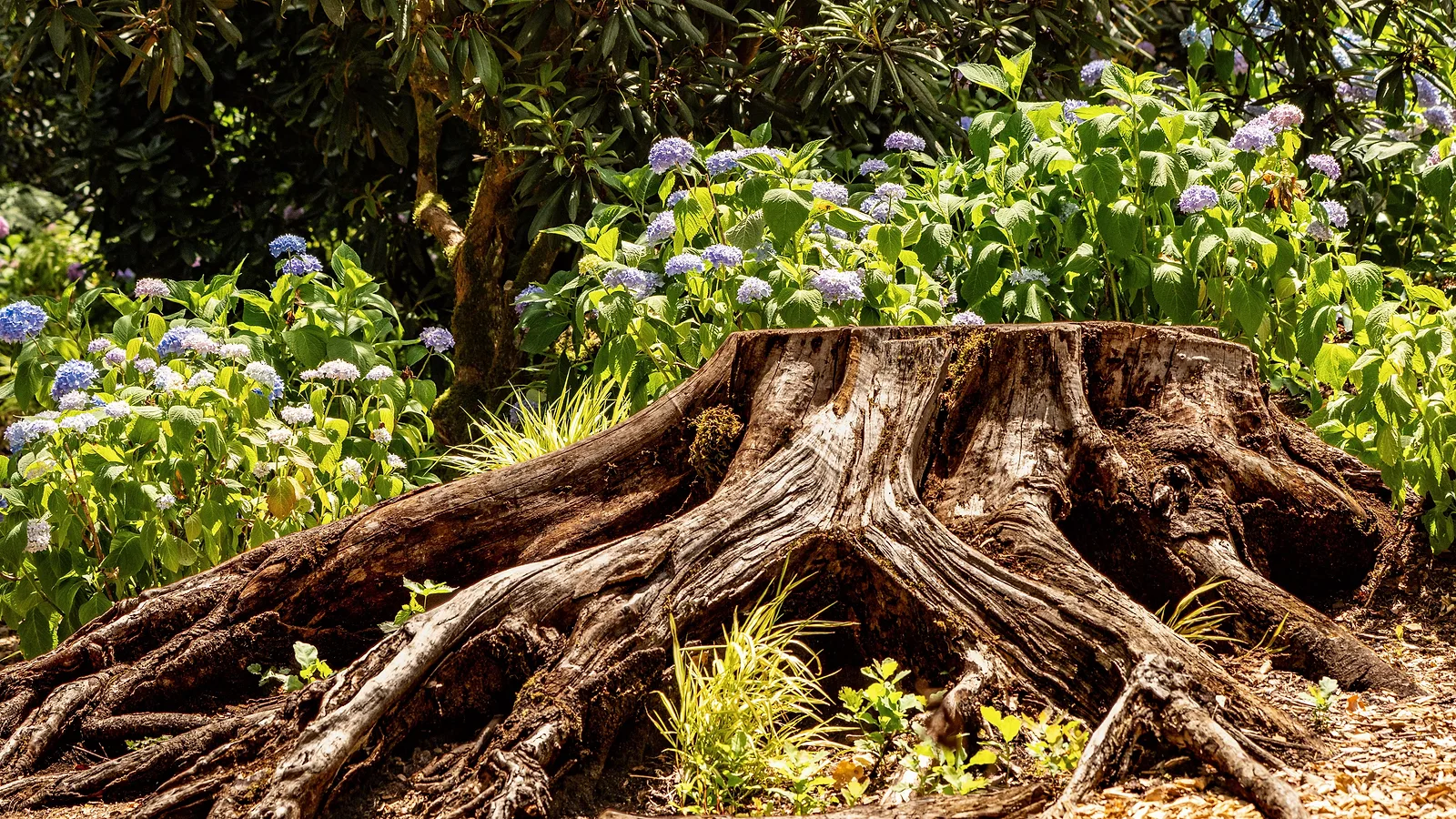
After a removal, a lot of people leave the stump and plan to deal with it later. Later usually means years. In the meantime a stump is a trip hazard, a mower obstacle, and — as it rots — a home for termites, carpenter ants and fungus. Some species will also sprout new shoots from the stump and roots.
Stump grinding is what most yards need. A grinder chews the stump and the main surface roots down below ground level, leaving a bed of wood chips. The deeper roots are left to decompose naturally. It's fast, it's much less disruptive than digging, and the spot can be back-filled and planted, turfed or paved.
Full stump removal — pulling the stump and root ball out of the ground — is a much bigger job. It usually means heavy equipment and a large hole, and it's only worth it when you're building on the spot, pouring a foundation, or the roots themselves are the problem.
Depth matters. For lawn or planting beds, grinding several inches below grade is usually enough. For hardscape or a new tree in the same spot, we grind deeper and clear more of the root zone. Tell us what's going in next and we'll grind to suit.
Before grinding, irrigation lines and buried utilities near the stump need to be located — a grinder will go through a sprinkler line without noticing. We check first.
Stump grinding can be done on the same visit as a removal, or on its own for old stumps — including ones left by another company. Call Cortez Tree Care at (619) 781-6353 for a free estimate.